
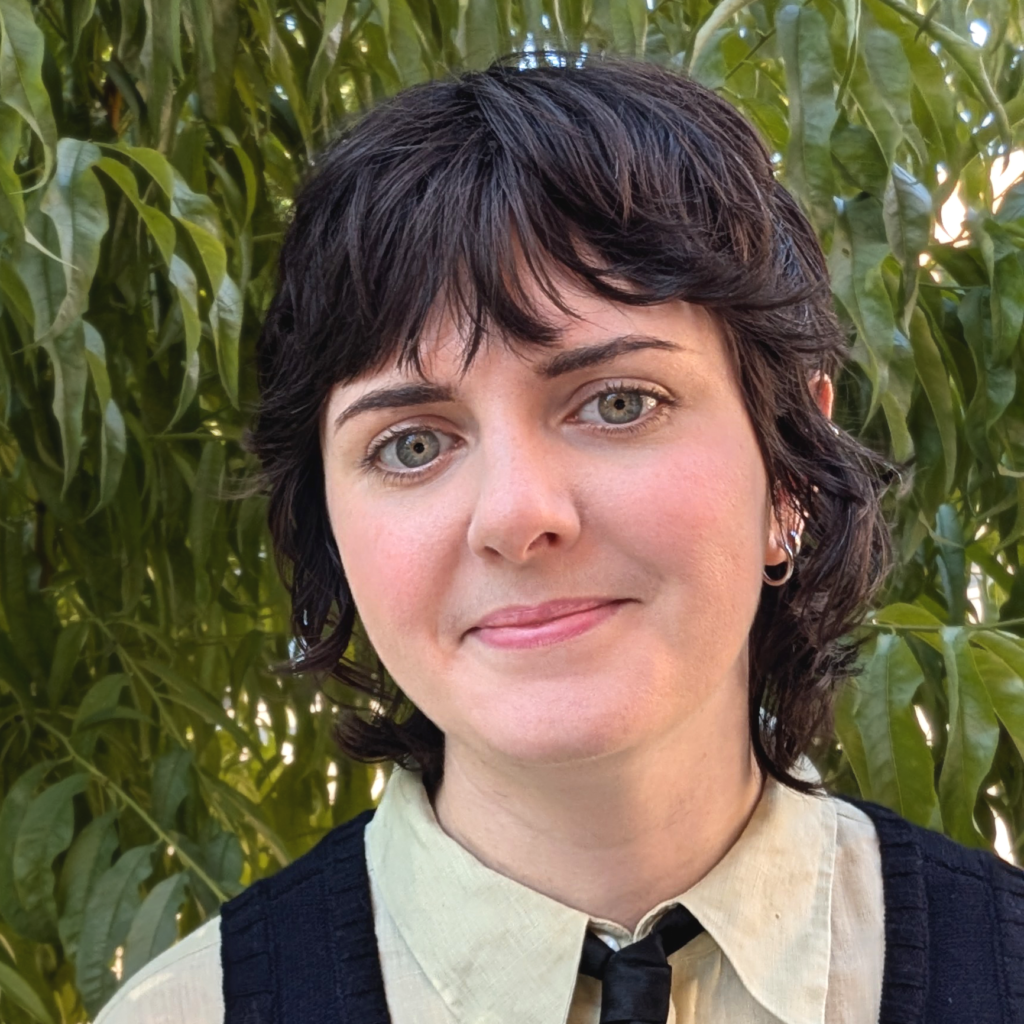
Elise is a psychotherapist at Wildflower. In her clinical practice, Elise draws on Emotionally Focused Therapy, the Satir Growth Model, Relational Cultural Theory, and existential therapy. Elise works with adolescents, adults, couples, and family structures experiencing disconnection related to alienation, depression, anxiety, grief, loss, transitions to parenthood, and identity transformations. Elise has experience in addressing painful cycles of conflict and distance, often rooted in attachment wounds and relational trauma. She obtained her master’s degree at Northeastern Illinois University in couple and family counseling. Read Elise’s full bio here.
What inspired you to pursue a career as a psychotherapist?
Growing up in a family navigating the impact of mental illness gave me an early understanding of its profound effects on individuals and families. Visual art became my refuge, and I originally planned to pursue a career as an artist. After moving to Chicago with no job and little direction, I decided to dedicate a year to service with AmeriCorps as a math tutor in Chicago Public Schools. There, I found a passion for talking to the kids who got kicked out of class. I loved having the opportunity to slow down, connect with them, and see sides of them that often went unnoticed. Every role since has led me closer to psychotherapy, with my work as a youth advocate confirming I had found my path. I love this field because it is both deeply creative and personally impactful. I am continuously surprised, moved, and challenged by the stories I’m invited into.
As a psychotherapist, what part of your job is most satisfying?
The most satisfying part of my job is seeing a client answer their own question. So often, we come to therapy hoping someone will tell us what to do. It can be understandably annoying when a therapist tends to offer more questions than answers. The truth is the most meaningful change rarely comes from advice but from a deeper awareness of our emotions, values, and needs. Those “aha!” moments can be electric!
How would you describe your therapeutic approach?
My approach is relational, collaborative, and grounded in the belief that healing happens through connection. I draw from Emotionally Focused Therapy, the Satir Growth Model, Relational-Cultural Theory, and existential therapy. What connects all my theoretical influences is an emphasis on growth, meaning-making, authenticity, context, and emotional experience.
Why do you believe that psychotherapy can help?
I believe psychotherapy can help because we are not meant to navigate life’s challenges alone. The act of being witnessed, seen, and understood is deeply powerful. Whether with a therapist or with loved ones, relationships have the power to transform us. Sometimes, there’s a gap between what we intellectually know and what we feel emotionally. The relational experience of therapy can help bridge that gap by creating a sense of safety that allows us to address our deepest needs and desires.
What are some of your specialties and what drew you to them?
I love working with couples and families. I am a firm believer in the transformative power of love (as corny as it sounds). What I find rewarding about this work is the unique puzzle of merging differing perspectives, goals, feelings, and fears. I have deep respect for couples and families navigating trauma, mental illness, and circumstances they did not choose. Choosing to be vulnerable in the face of pain is a profoundly brave act. Witnessing relationships grow stronger through authenticity and understanding continually deepens my belief in the healing power of connection.
What is one thing about psychotherapy you wish everyone knew?
It’s often said that what makes therapy successful is a strong therapeutic alliance. This means that the therapist and client have mutual trust, empathy, and a sense of safety. Within this dynamic, clients should feel comfortable challenging their therapist! It’s okay to make mistakes, even in therapy. Both therapist and client can misspeak or misunderstand. Therapy is a place where we can learn to deal with mistakes without fear of shame or judgement. I am guided by the belief that relationships are built in repair.
What is your motto or personal mantra?
The only way out is through!
What are your favorite self-care activities?
I love activities that offer moments of stillness while still allowing me to feel connected to others. For me, that sense of connection can be found at both ends of the spectrum, whether I’m standing in a crowd at a loud, abrasive concert or quietly birding in the forest. Moments of just being without expectation or judgement allow me to recharge. I also appreciate a moment of drawing or creating. I find the adage “Quiet your mind and busy your hands” to be true for me.