
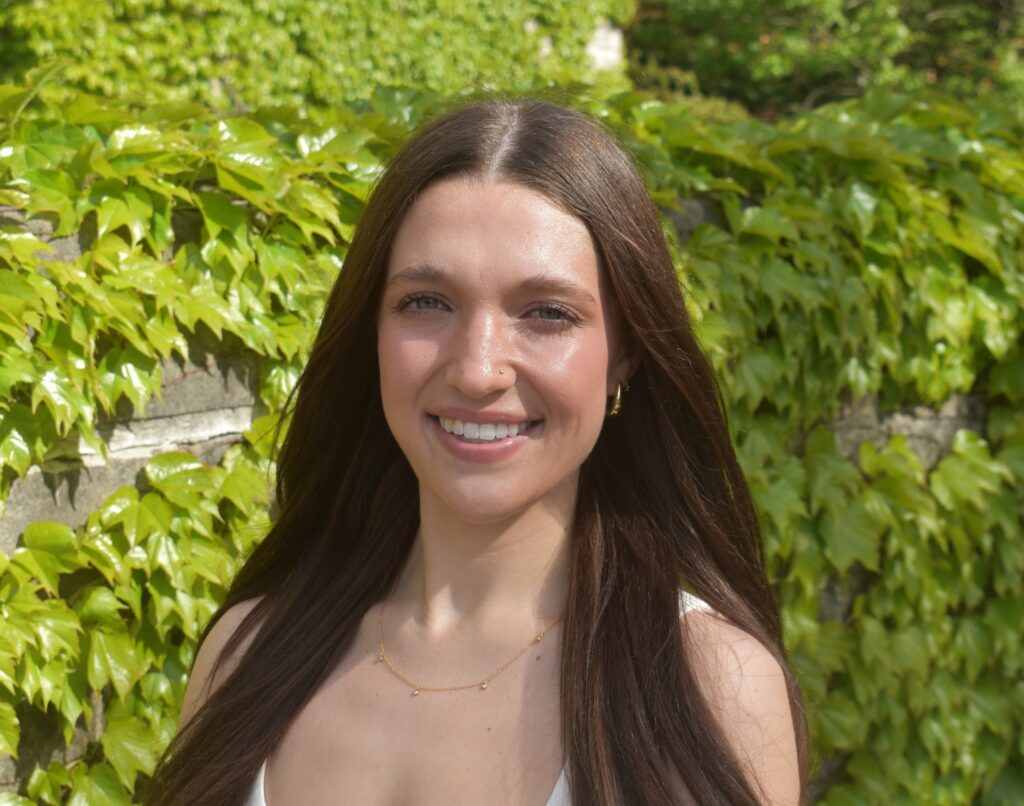
Cate is a psychotherapist at Wildflower. In her clinical practice, Cate draws primarily on relational, feminist, and psychodynamic therapy through a trauma-informed lens. Cate works with adolescents, adults, couples, and family structures experiencing stressful transitions including the transition to parenthood, anxiety and mood disorders, women’s issues, complex trauma, sexual challenges, and relationship issues. Cate has experience working with those who feel overwhelmed by roles they never fully chose and those who are trying to reconnect with themselves after years spent in “survival mode.” She obtained her master’s degree at Northwestern University in Counseling. Read Cate’s full bio here.
What inspired you to pursue a career as a psychotherapist?
My journey to pursuing a career in psychotherapy came after many years of being a ballerina. In this environment, I became increasingly aware of mental health struggles and the pressure that is put on athletes and artists. It seemed like a very natural next step to want to explore, not only to understand why, but to also provide support to my peers who were struggling especially with self-esteem, anxiety, and identity concerns. I decided to take a psychology class alongside my dance classes in college and the rest is history!
As a psychotherapist, what part of your job is most satisfying?
Standing alongside a client as they take their first steps toward healing. Exploring and gaining insight into their patterns and emotions that used to feel so complex and foggy while deepening their connection with themselves is affirming and empowering. It takes so much bravery and I like to acknowledge this to my clients often.
How would you describe your therapeutic approach?
My therapeutic approach is very integrative. I want the therapeutic space to feel both a place to be adventurous and vulnerable. I also believe that the heart of therapy is the development of mutual empathy between therapist and client so understanding my clients through this context helps me see them as a whole person. I find myself drawing patterns between childhood and adulthood as I lean psychodynamically, but I also try to integrate feminist ideas such as critical consciousness and empowerment into my sessions. I find myself integrating a lot of somatic work to realign the mind-body connection which can get lost so easily for clients struggling with complex trauma.
Why do you believe that psychotherapy can help?
Humans heal through connection. We’re absolutely not meant to carry everything alone. Psychotherapy can be a useful space that is both consistent and authentic as it is about understanding yourself better, and how life has shaped you. Psychotherapy helps make patterns become clearer, burdens feel lighter, and inner values heard louder.
What are some of your specialties and what drew you to them?
I discovered reproductive mental health during my internship in graduate school. It felt like the most feminist way I could practice therapy. Working at the Women’s hospital and in the ISCU allowed me the opportunity to see different kinds of mental health presentations and situations such as complex trauma, grief and loss, infertility, anxiety, mood disorders, self-esteem and body image issues, and relationship challenges. I realized how encompassing working with this population was, and how I could help heal so many things at once. Working with new parents breaks the cycle as they heal their own attachment wounds and transition into a new phase of life with confidence.
What is one thing about psychotherapy you wish everyone knew?
Your therapeutic journey should be tailored to you, at your own pace, and dictated with your specific needs in mind. True growth and healing happen when you feel safe, supported, and stay committed to the process.
What is your motto or personal mantra?
Nothing will pass you by that is meant for you. This helps reframe what I have control over, versus what I do not have control over. It also helps remind me that we can dictate our own futures.
What are your favorite self-care activities?
I have recently started doing yoga a few times a week to really help center me before I start my day. It calms my nervous system and helps me both reconnect to and exercise my body.